

Wall Charger
What is Wall Charger?
A wall charger is a device that connects to a wall outlet and charges your electronic device. It is a stationary charger that is designed to be used indoors. Wall chargers come in different shapes and sizes and can be used to charge various devices, including smartphones, tablets, laptops, and even electric cars. They are generally more powerful than car chargers and can charge your device faster.
Why Choose Us?
Rich Experience
Established in 2009, Helge Electronics Co., Ltd. is a leading manufacturer based in Shenzhen, China, renowned for its production of data cables and chargers. With over 180 employees, our company has garnered extensive expertise in the industry.
Complete Qualifications
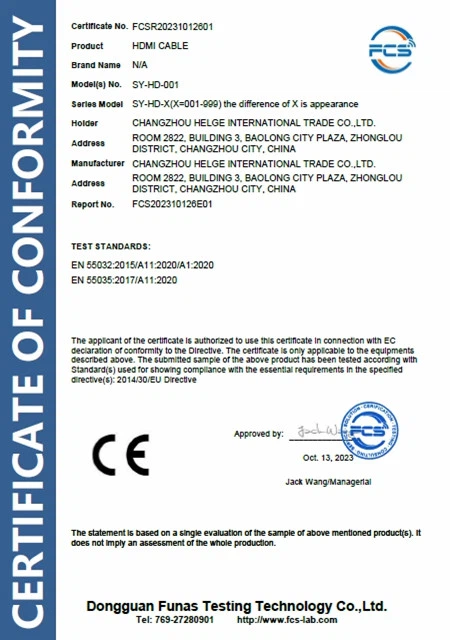
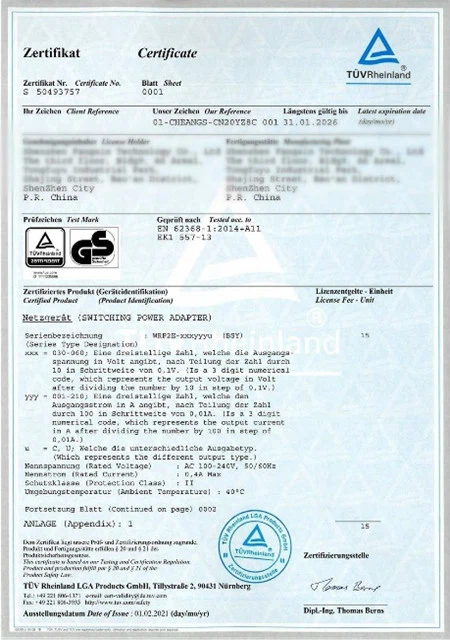
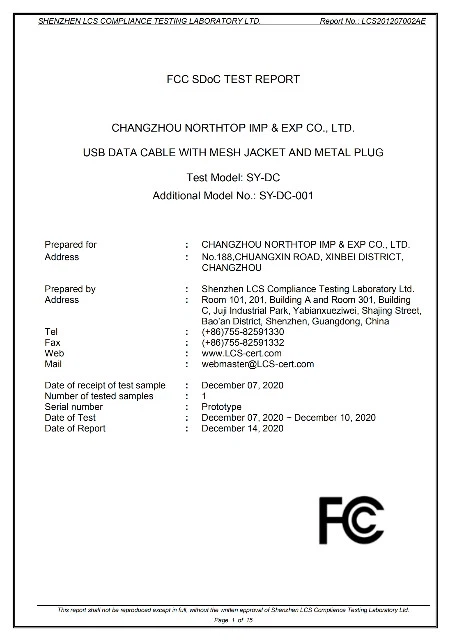
Boasting a remarkable track record of 15 years in exports, Helge Electronics holds a comprehensive array of certifications, including UL/CUL, TUV/GS, PSE, KC, KCC, CB, FCC, CCC, UKCA, ERP, CEC/CE, EMC, and SMETA. These certifications underscore our commitment to unparalleled quality and adherence to international standards.
Professional Technical Team
At the core of our operations is a dynamic research and development team dedicated to driving innovation and product enhancement. Their relentless pursuit of excellence ensures that we stay ahead of market trends and technological advancements, delivering cutting-edge solutions to our customers.
Quality Assurance
Our stringent quality control system guarantees that every product undergoes rigorous inspection, from raw material sourcing to final production, maintaining the highest standards of quality and reliability.


↵
Benefits of Using Wall Charger
• Compact
The wall charger involves a connector hub at one side of the charger. This is where the change from AC to DC current happens. You can eliminate the USB link from the adapter to impeccably get it into the handbag and PC case.
• Flexible
USB mobile phone chargers are far adaptable than different kinds of chargers accessible on the lookout. However vehicle chargers are likewise a valuable accessory, they have a few impediments too. A large portion of the vehicle chargers are intended for attachments which are for the most part tracked down in automobiles. In opposition to this, USB mobile phone chargers will effectively squeeze into an attachment, PCs, and PCs.
• Speedy
However a wide range of USB chargers supply a sufficient measure of ability to charge the phones, there are likewise not many which are far strong and proficient than others. This sort of chargers can charge the mobiles in a far effective manner than common ones. To this end it is educated to check the result details regarding various chargers to choose the right one for your mobile. In the event that the mobile charge isn't adequately productive to charge the phone, it very well might be conceivable that it will charge the phone. Yet, it could have the option to complete the re-energize much more rapidly.
• Durability
The size, ability to charge, and similarity of the USB mobile phone charger makes it an extraordinary choice for the clients to convey any place they go. In any event, when neglected to convey the connector of the charger, you can associate the USB wire with the power bank or PC to re-energize your phone during the open air trip.
What Is the Difference Between a Wall Charger and a Normal Charger?
Wall chargers plug directly into the outlet, whereas desktop chargers are connected by a cord.
Unlike typical USB charger that only provides 500 amps of current at any time, wall chargers supply up to 600 amps meaning that it will take shorter time to charge your cell phone.
If you have used USB chargers before, you then probably know how frustrating they can be. Most USB break easily or abruptly stops working for no concrete reason. Just imagine your USB charger breaking down when you want to make an important call? To avoid being caught up in such embarrassing situation you need to install a wall charger which are made with quality material that are durable. If you install wall charger in your house, you will never gain have to think of installing a new one any time soon because they are durable.

• Low Wattage Chargers: 5-10W
Chargers with low wattage, typically ranging from 5 to 10 watts, are commonly included with new phone purchases. These chargers are suitable for basic charging needs and are often used for overnight charging or when time is not a constraint. They are reliable, pose minimal risk of overheating, and do not significantly impact the long-term health of the phone's battery. However, they may take longer to fully recharge the phone's battery.
• Standard Wattage Chargers: 10-18W
Standard wattage chargers, ranging from 10 to 18 watts, are widely used by many people. They offer a good balance between charging speed and battery health. On average, these chargers can fully recharge a phone battery in approximately 1 to 2 hours, depending on the phone model and battery capacity. They are considered fast enough for daily use, and most phones support this wattage range without any issues.
• Fast Charging and High Wattage Chargers: 18-65W
The optimal phone charger wattage depends on the specific device and its charging capabilities. Generally, charger power can range from 18-65W, and some chargers even exceed 120W. However, most phones are compatible with fast charging technology, typically utilizing the USB-C standard, which allows for significantly faster charging speeds.
To determine the ideal wattage for your phone charger, it is important to check the charging protocol supported by your device. If you want to read more about different charging protocols, Click here to Read.
If your phone utilizes a proprietary charging method, it is recommended to use the charger provided or recommended by the manufacturer. It's worth noting that using a higher-wattage charger will generally not harm your phone's battery, but it may not necessarily charge your device any faster if it is not designed to support high-wattage charging.
Is 20 Watts a Lot for a Wall Charger?
Watts (W) are the power units and are used to measure the rate at which energy is transmitted. In the context of "how many watts to charge a phone", the number of Watts signifies how fast the device can be charged. A higher-wattage charger delivers more power and thus, more energy per unit time, facilitating faster charging times.
When it comes to charging, the power (Watts) is calculated by multiplying Voltage (Volts) by Current (Amperes). Different devices require different amounts of power (Watts) to charge. Small devices like smartphones typically have power requirements between 5W and 20W while larger devices like laptops can demand up to 60W to 100W. The device in question, the charger, and the charging cable all need to support the same wattage to achieve the fastest charging speed possible.
Most devices draw current as needed, meaning they will only use as much power as they are designed to, regardless of the wattage of the phone charger. This means that you can typically use a higher-wattage phone charger without damaging your device, although there might be certain exceptions. However, using a phone charger wattage that's lower than recommended can result in slower charging times. It's essential to use a charger and cable designed and certified for your specific device to ensure adequate charging times and avoid potential damage to the device's battery.

While a higher-wattage charger is safe, voltage compatibility plays an important role in influencing your phone's health. While most smartphones operate on a standard voltage of 5 volts, using a charger with higher voltage can significantly damage your phone.
It's always recommended to use a charger that provides the correct voltage that your smartphone supports. You can check the voltage as it is typically indicated on the charger body itself.
The Importance of Wall Charger
In today's fast-paced world, our dependence on technology is undeniable. We rely on our smartphones, tablets, and other gadgets for communication, entertainment, and even productivity. However, all these devices share one common weakness - they need power to function. This is where portable chargers come into play.
A wall charger, also known as a power bank, is a portable battery that can be used to charge electronic devices on the go. It provides a convenient and reliable source of power when you don't have access to a wall socket or when you're away from home. With a portable charger in your bag or pocket, you can ensure that your devices stay powered up no matter where you are.

1. Charging Cable: Both car chargers and wall chargers require a charging cable to connect to your device. Make sure to choose a cable that is compatible with your device and supports fast charging if you need it.
2. Number of Ports: Some wall chargers and car chargers come with multiple ports, which can be useful if you need to charge multiple devices at the same time.
3. Brand and Quality: It is important to choose a charger from a reputable brand and made of high-quality materials. Cheap chargers may be less expensive, but they may not be safe to use and could damage your device.
4. Usage: Consider how often you will be using the charger and in what circumstances. If you travel frequently or need to charge your device on the go, a car charger may be more useful. If you mainly charge your device at home or in the office, a wall charger may be a better option.
How To Choose The Right Wall Charger?
1. Find out how much power you need (W)
When considering a USB wall charger your first concern is how much power your device needs to charge effectively. This will often list the very maximum charging power a given device is capable of. You can turn to the manufacturer's website/spec sheet for this. In general, smartphones require between 18 – 120 W (watts) of power.
2. Look into the supported charging protocol
In general, there are three smartphone charging standards, and these are:
· Universal – USB Power Delivery (USB PD): the most common USB - C charging standard for phones.
· Proprietary – OEM-specific charging standards: Limited to manufacturer products which may offer exclusive fast charge technology which you won't find in third-party plugs.
· Legacy – Pre - USB - C: outdated and slowly being phased out, usually found on older lower powered phones.
So the key to correctly choosing a wall charger for your phone that will charge at the fastest possible speed is ensuring enough throughput wattage whilst supporting the required charging standard.
3. Check the output charging speed of your wall charger
Always remember to look at the Output of the Wall charger too before purchasing,
· 5V 1A: A 5V 1A charger means it's a 5W charger (5Vx1A=5W)
· 5V 2A: Similarly 5V 2A charger is a 10W charger.
Effectively a 5V 2A charger is going to charge faster and more efficiently.
4. Consider the number of charging ports supported
It's important to bare in mind the use case for your wall charger before purchasing. Futureproofing is key, do you solely need your charger for one device? Perhaps you wish to be able to charge two portable devices at the same time such as a phone and a tablet. Consider your use case carefully to maximise the usefulness of the charger you purchase and check that it has the correct USB ports required for your device cables.
5. Evaluate the safety features of your wall charger
Input/output control, voltage regulation, and overheat protection, are all safety features that should be a baseline consideration when choosing your wall charger. These will regulate power in and out of the charger, prevent short circuits and ensure that your charger will not overheat. Without these, your wall charger or connected devices could be damaged, or in the worst-case scenario cause a fire.
Our Factory
Established in 2009, Helge Electronics Co., Ltd. is a leading manufacturer based in Shenzhen, China, renowned for its production of data cables and chargers. With over 180 employees, our company has garnered extensive expertise in the industry.
Boasting a remarkable track record of 15 years in exports, Helge Electronics holds a comprehensive array of certifications, including UL/CUL, TUV/GS, PSE, KC, KCC, CB, FCC, CCC, UKCA, ERP, CEC/CE, EMC, and SMETA. These certifications underscore our commitment to unparalleled quality and adherence to international standards.
Our Certificate




Ultimate FAQ Guide to Wall Charger
We're well-known as one of the leading wall charger manufacturers and suppliers in China. Our factory offers high quality wall charger made in China with competitive price. Welcome to place an order.
indoor charger, charging cable, hand crank charger