

HDMI Cable
HDMI 2.2 is here—redefining high-performance connectivity. With a massive 96Gbps bandwidth, our latest HDMI 2.2 cables support up to 4K@480Hz, 8K@240Hz, and even 10K@120Hz output. Engineered for future-ready displays, gaming, VR, and advanced media setups, they also feature the new Latency Indication Protocol (LIP) for ultra-precise audio-video sync. Backed by the Ultra96 cable specification, these cables are built to handle extreme data rates with zero signal loss. Ideal for professional applications and forward-thinking distributors.
Why Choose Us?
Full HDMI Version Coverage (1.4 to 2.1 & AOC)
We offer HDMI 1.4 to 2.1 cables and long-distance AOC solutions, supporting up to 8K with stable, high-speed transmission.
Custom Length, Shell & Material Options
We offer OEM customization for cable lengths (0.5m to 30m+), materials (PVC, nylon braided, flat cables), connector shells (aluminum, zinc alloy, gold-plated), and color schemes. Suitable for retail brands, e-commerce bundles, and promotional campaigns.
Certified & Compliance Ready
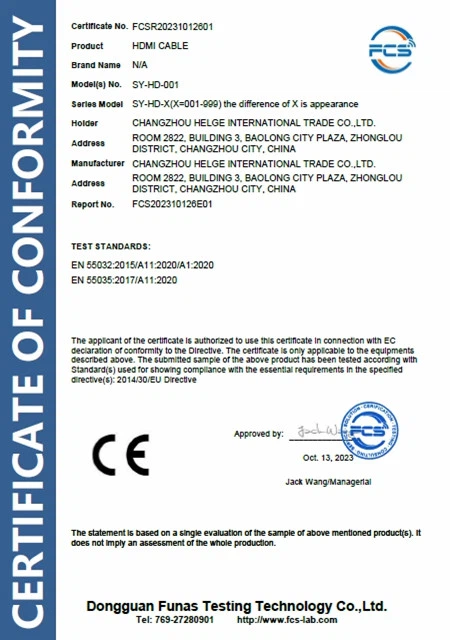
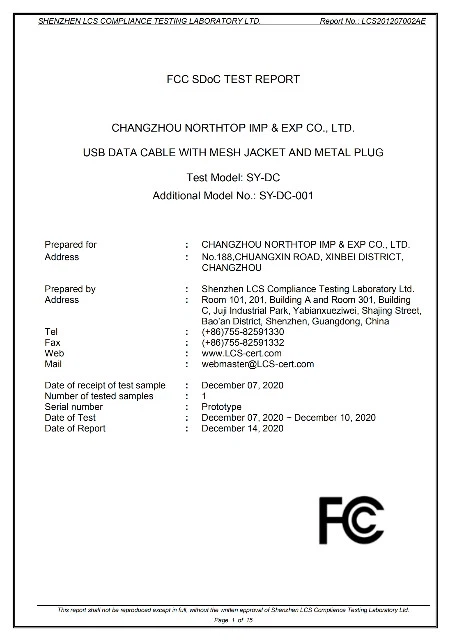
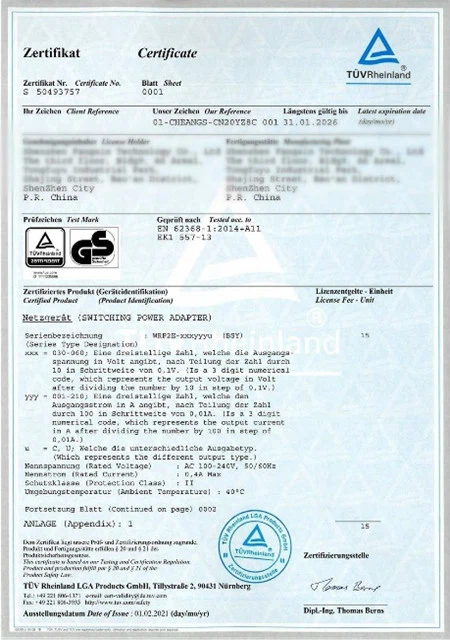
All cables are produced under strict quality control and hold CE, FCC, RoHS certifications. For specific markets, we support additional reports like ATC, UL, UKCA, or retail compliance (e.g. barcode, blister packs, HDCP 2.2 documentation).
Flexible Cooperation & Low MOQ
We support small-volume trial orders, fast sampling, and scalable production—ideal for new brand launches, crowdfunding projects, or market testing.


Introduction to HDMI Cable
An HDMI cable is a cable that transmits digital audio and video signals from a device to a display. HDMI cables are used to connect devices like computers, gaming consoles, Blu-ray players, and streaming devices to TVs, monitors, and projectors. HDMI cables are the primary way to connect smart devices to a TV or home theater system.
HDMI Version Comparison
|
Version |
Max Resolution |
Bandwidth |
Key Features |
Best For |
|
HDMI 1.4 |
1080p @ 60Hz, 4K @ 30Hz |
10.2 Gbps |
ARC, 3D, Ethernet over HDMI |
Basic HD TVs, standard home setups |
|
HDMI 2.0 |
4K @ 60Hz |
18 Gbps |
HDR10, 21:9 aspect ratio, dual video streams |
4K TVs, streaming devices, presentations |
|
HDMI 2.1 |
8K @ 60Hz, 4K @ 120Hz |
48 Gbps |
eARC, VRR, ALLM, Dynamic HDR, gaming-ready |
Gaming consoles, high-end TVs, home theater systems |
|
HDMI 2.2 |
Up to 10K @ 120Hz |
96 Gbps |
Ultra96 cable standard, Latency Indication Protocol (LIP), ultra-low latency |
VR/AR, commercial displays, broadcast, future-proof systems |
|
AOC HDMI 2.0 |
4K @ 60Hz (up to 100m) |
18 Gbps |
Active Optical Cable, low signal loss over long distances |
Long-range 4K setups, conference rooms, digital signage |
|
AOC HDMI 2.1 |
8K @ 60Hz, 4K @ 120Hz (up to 50m) |
48 Gbps |
Fiber optic transmission, no EMI interference, ultra-stable high bandwidth |
High-end AV systems, 8K broadcasting, professional installations |
Benefits of HDMI Cable
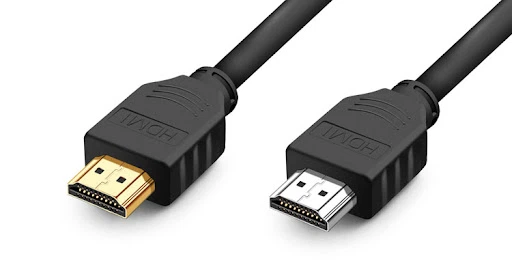
Gold-Plated vs. Nickel-Plated HDMI Connectors
Gold-Plated Connectors
Gold connectors offer excellent corrosion resistance and stable conductivity over time. They're ideal for humid environments, long-term use, and high-end applications like home theaters, gaming, or professional AV setups. They also provide a premium look that adds value to your brand.
Nickel-Plated Connectors
Nickel-plated connectors are more cost-effective while still providing good durability and reliable performance. They’re suitable for standard use, indoor environments, and budget-friendly product lines.
Which to Choose?
Go with gold-plated if your customers prioritize long-term stability and premium quality.
Choose nickel-plated for entry-level markets where cost and volume matter most.
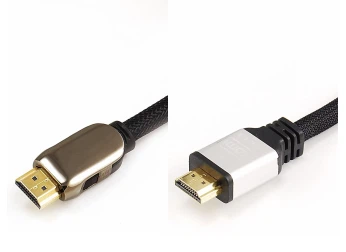
Aluminum vs. Zinc Alloy HDMI Shells
Aluminum Shells
Aluminum housings are lightweight, cost-effective, and offer good heat dissipation. They’re ideal for mass-market cables and OEM projects where durability and low weight are both important. The matte or anodized finish also allows for clean, modern branding.
Zinc Alloy Shells
Zinc alloy shells are heavier, more rigid, and have a premium metallic feel. They provide stronger protection against drops and compression, making them perfect for high-end or rugged-use HDMI cables. Their glossy finish also enhances product aesthetics on shelves.
Which to Choose?
Choose aluminum for affordable, lightweight solutions with clean design.
Choose zinc alloy when targeting premium markets that value strength, durability, and visual impact.

Nylon Braided vs. PVC Jacket
Nylon Braided Jacket
Nylon braided cables are strong, flexible, and resistant to wear and bending. They’re ideal for users who frequently unplug and move cables—such as gamers, mobile users, or retailers looking for a premium, rugged look. The textured finish also enhances perceived quality.
PVC Jacket
PVC jackets are soft, smooth, and easy to mold. They’re more affordable and commonly used for indoor or fixed installations where less movement is expected. Perfect for bulk use, giveaways, or entry-level product lines.
Which to Choose?
Go with nylon braided for durability and retail appeal.
Use PVC for cost-effective, everyday applications.
Shielding Comparison: Single-Layer vs. Multi-Layer
Single-Layer Shielding
Basic HDMI cables often utilize a single layer of aluminum foil shielding. This provides minimal protection against electromagnetic interference (EMI) and is generally suitable for short cable runs in environments with low electronic noise.
Multi-Layer Shielding
High-quality HDMI cables feature multi-layer shielding, typically combining aluminum foil, braided metal mesh, and sometimes additional layers. This advanced shielding significantly reduces EMI and ensures stable, high-speed signal transmission, especially important for 4K/8K resolutions and longer cable lengths.
Visual Comparison:
· Single-Layer Shielding Example:
· Multi-Layer Shielding Example:
Which to Choose?
· Opt for multi-layer shielding when requiring high-bandwidth, long-distance, or professional AV setups.
· Choose single-layer shielding for cost-effective, short-distance applications with minimal interference concerns.
Requirements for using HDMI Cable
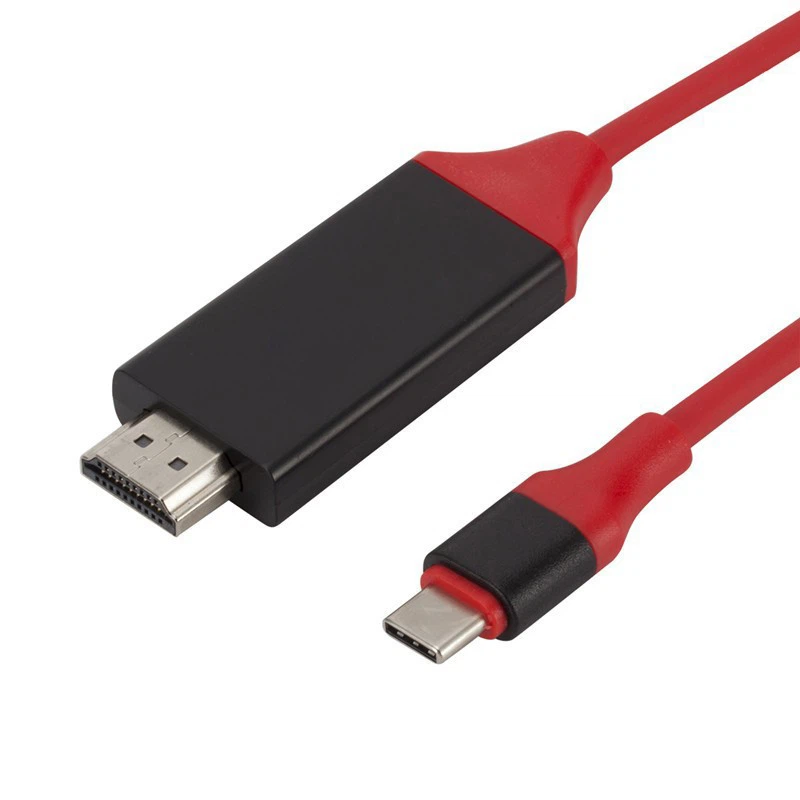
Plug USB C cable to your Cellphone or Tablet directly.
Plug HDMI cable to your TV (output device) and switch the TV (ouput device) to HDMI channel.
Plug USB cable to Power adapter (5V, 1A). No need to be worry about Power out.
Please push the "trust" when your device shows the message.
Wait 10 seconds, the synchronization screen is completed.
Where Our HDMI Cables Work Best
Home Entertainment Users
· Use: Connecting UHD TVs, soundbars, Blu-ray players, and AV receivers
· Recommended Cable: HDMI 2.0 / 2.1, 2–5m, gold-plated, nylon braided
· Why: Ensures stable 4K or 8K video with ARC/eARC support for full theater-quality sound.
Gamers & eSports Players
· Use: High-frame-rate gaming with PS5, Xbox Series X, and 144Hz+ monitors
· Recommended Cable: HDMI 2.1, short-run, low-latency, ultra-high bandwidth
· Why: Supports 4K @120Hz, VRR, and ALLM for smoother, responsive gameplay.
Offices & Meeting Rooms
· Use: Cnnecting laptops to projectors or HDMI splitters in conference settings
· Recommended Cable: HDMI 2.0 / 2.1, PVC or flat design for easy routing
· Why: Delivers clear signal with minimal setup and clutter in shared spaces.
Retail & Digital Signage
· Use: In-store display loops, ad screens, mall kiosks
· Recommended Cable: HDMI 2.0 or AOC HDMI for 10m+ runs
· Why: AOC ensures stable transmission over long distances without quality drop.
Broadcast & Professional AV Installers
· Use: Studio setups, video walls, event venues, control centers
· Recommended Cable: HDMI 2.1 / AOC, metal shell, multi-layer shielding
· Why: Zero interference, 8K-ready, suitable for complex environments.
Construction & Smart Home Integrators
· Use: Pre-installation in walls, ceilings, or custom home theaters
· Recommended Cable: HDMI 2.0 / 2.1, long-run or AOC, CL2/CL3-rated jacket
· Why: Designed for in-wall safety, long-term signal stability, and future-proof AV installations.
We commonly accept T/T, L/C, and Western Union.
Payment<=USD 5000, 100% in advance.
Payment>=USD 5000, 30% T/T in advance, balance before shipment.
Certificate




FAQ
We're well-known as one of the leading hdmi cable manufacturers and suppliers in China. Our factory offers high quality hdmi cable made in China with competitive price. Welcome to place an order.
hdmi cable wholesale, hdmi cable asus, hdmi cable for soundbar