

Wireless Charger
What is Wireless Charger?
Wireless chargers work by exploiting the physical principle of electromagnetic induction with the aim of recharging solely through contact between the charging station and device. Once the charger is connected to the power supply, it is energised and generates energy in the form of an electromagnetic field, which can then be transferred to a compatible receiver device when correctly positioned.
Why Choose Us?
Rich Experience
Established in 2009, Helge Electronics Co., Ltd. is a leading manufacturer based in Shenzhen, China, renowned for its production of data cables and chargers. With over 180 employees, our company has garnered extensive expertise in the industry.
Complete Qualifications
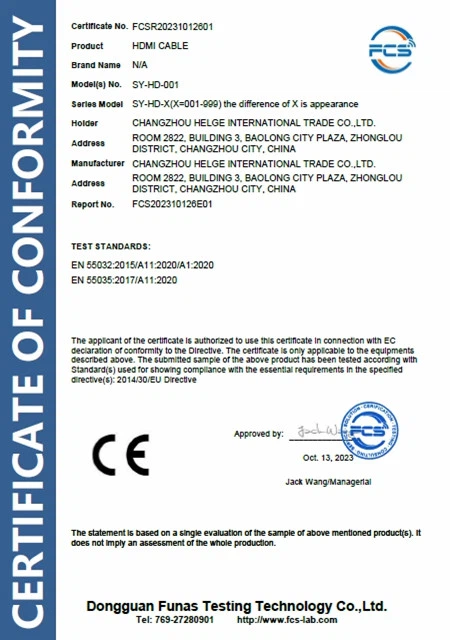
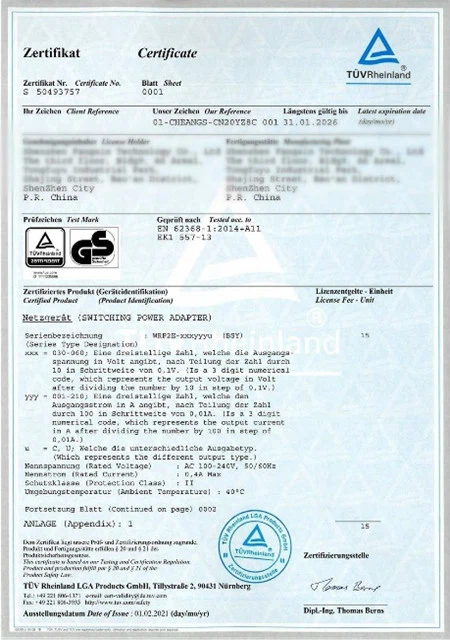
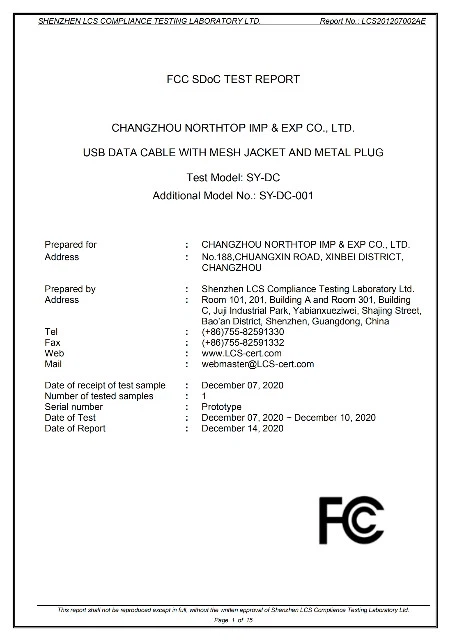
Boasting a remarkable track record of 15 years in exports, Helge Electronics holds a comprehensive array of certifications, including UL/CUL, TUV/GS, PSE, KC, KCC, CB, FCC, CCC, UKCA, ERP, CEC/CE, EMC, and SMETA. These certifications underscore our commitment to unparalleled quality and adherence to international standards.
Professional Technical Team
At the core of our operations is a dynamic research and development team dedicated to driving innovation and product enhancement. Their relentless pursuit of excellence ensures that we stay ahead of market trends and technological advancements, delivering cutting-edge solutions to our customers.
Quality Assurance
Our stringent quality control system guarantees that every product undergoes rigorous inspection, from raw material sourcing to final production, maintaining the highest standards of quality and reliability.


Pros of Using a Wireless Charger
• Ultimate Convenience
One of the primary advantages of wireless charging is the convenience it provides. Users can simply place their compatible devices on a wireless charging pad or dock, without the need for plugging and unplugging cables. This ease of use is especially valuable in scenarios where quick and hassle-free charging is desired. This is also good for people with mobility issues, who usually have stiff joints and strength difficulties.
• Reduced Wear and Tear on Charging Ports
Since wireless charging eliminates the need for physical connectors, it reduces wear and tear on the charging ports of mobile devices. Traditional charging methods with cables can lead to connector degradation over time due to repeated plugging and unplugging. Connector degradation means damaged ports, which will lead to inconsistent battery charging and will lead to a phone's degradation over time.
• Versatility and Compatibility
Wireless chargers, especially those that adhere to widely adopted standards, offer compatibility with a variety of devices from different manufacturers and brands. This versatility makes it possible to use the same charger for multiple devices, provided they support the same wireless charging standard.
• No Need for Multiple Cables
And since wireless charging means wide versatility and compatibility, users with wireless chargers don't need to carry multiple charging cables for different devices anymore. As long as the devices are compatible with the same wireless charging standard, they can share a single charging pad or dock. This saves time and storage for a lot of people, especially those who are always traveling.
• Clean and Clutter-Free
Wireless chargers also contribute to a cleaner and less cluttered charging space, as there are no cables to manage. This can be particularly beneficial in environments where cable management or limited space are concerned. This includes a study desk, bedside table, office desk, cubicle or workstation, a small bedroom apartment, and more.
• Innovative Designs and Household Integration
Wireless charging technology allows for innovative design choices in both chargers and devices. For example, furniture, lamps, and other household accessories can incorporate built-in wireless charging pads. These will add functionality without sacrificing aesthetics. These will add to the overall value of an item, further attracting customers and supporters.
• Fast Charging Options
Fast wireless charging options are also available from some brands. This will allow the users to charge their devices more quickly compared to standard charging methods. This is particularly useful when a quick battery top-up is needed for various cases like traveling, meetings, classes, events, and more.
• Compatibility with Other Accessories
Some wireless chargers support additional accessories like magnetic cases and wallets. These accessories can attach to the charging pad magnetically, adding extra functionality beyond just charging. This is ultimately beneficial for those who want to save space and money, and for those who want to create a seamless ecosystem.
• Style and Aesthetic
Wireless chargers also contribute to the overall style and aesthetics of a household. For people who want to keep their place modern and dynamic, a wireless charger is an ideal solution. With various looks and styles, a wireless charger can fit into any home and provide beauty instead of clutter or chaos.
• Sustainability and Environmental Impact
Wireless charging have a better environmental impact than traditional charging, especially when it comes to e-waste or electronic waste. Unused and discarded chargers add up to about 11,000 metric tons of e-waste in Europe annually, which is why European Union lawmakers are looking for ways to combat this problem. Using a wireless charger might help individuals and regular consumers be more sustainable when it comes to their chargers.
How Wireless Charger Works?
Wireless charging isn't wireless. Without using wires, you can charge your phone, wristwatch, tablet, wireless headphones, or another device, but the wireless charger still has to be plugged into a wall outlet to work.
Magnetic induction is commonly used in wireless chargers. They transmit energy through magnetism, to put it simply. The gadget, such as a smartphone, is first placed on the wireless charger. A magnetic field is produced when the electricity from the wall outlet passes through the wire in the wireless charger. The gadget resting on the wireless charger's coil experiences a current due to the magnetic field. The battery is charged using the electrical energy that was once magnetic. To support wireless charging, devices must contain the essential hardware; a device without the required coil cannot charge wirelessly.

Generally no, because Wireless Charger phones or wireless car chargers of all types are designed to be safe to use with supported devices.
But sometimes it is harmful and causes the destruction of the phone's battery, and this is in some cases, including:
If the charger you are using is not compatible with your device or does not support approved charging standards, this will lead to ineffective charging or complete damage to the phone's battery.
Leaving your phone on the wireless charger for long periods after fully charging may cause corrosion and damage to your phone's battery in the long run.
Using a poor-quality Wireless Charger phone or wireless car charger may result in complete damage to the phone.
Is It Safe to Leave Wireless Chargers Plugged in All the Time?
We have established that leaving a phone on wireless charging for longer than the required periods does not threaten safety. However, safety is not the only concern, as you must also want to protect your smartphone's battery health. It is not as simple as safety, as experts have different takes on this issue. And to understand the theories of both sides, you have to understand a thing called "trickle charge."
Once the battery reaches 100%, the phone does not stop functioning. A number of sensors and chips remain active to run the engine and applications in the background. Smartphones withdraw energy from the battery to keep these sensors and background applications running.
So, after the phone has finished charging, it will drop to 99% because of the energy consumed by sensors and background applications. And the moment the battery drops to 99%, the smartphone will start charging again to make it 100%. This small withdrawal of energy from the charger is a "trickle charge," It happens two to three times overnight.
Some experts believe that trickle charges can increase a smartphone's temperature and expose the battery to stress owing to high voltages. It can damage the battery's health in the long run. The other side opines that modern smartphone batteries are designed to prevent the harm associated with a trickle charge. However, it is not clear whether the batteries of all smartphones are equipped to mitigate damage by the trickle charge.
We can assume that all flagship smartphones have advanced technologies to protect their batteries from the potential damages of trickle charges. However, the same cannot be said about budget or mid-range smartphones. It must also be mentioned that wireless charging is slower than wired one, so while the number of trickle charges per night is fewer, they are not nonexistent.
Why is My Phone Overheating When Wireless Charger?
If your wireless charger does not come with protective protocols against overheating, it can lead to the overheating of your phone. This is usually the case with uncertified and knock-off chargers that do not follow appropriate wireless charging standards.
If the charger is not the problem, then it can be the cover. Not all mobile phone covers can be used at the same time as a wireless charger. Metallic covers and thick protective covers, for example, can trap heat which can, in turn, overheat your phone.
A hardware issue may also cause overheating when wirelessly charging your phone. It is important to get your mobile phone checked for any damaged components as overheating can result in the faster degradation of your device. You can trust our experts to diagnose and repair your mobile phone issues.

We're not going to tell you what to do, but what we will say is that none of these devices are anywhere near as dangerous as they sound. The sun creates more radiation than your microwave, smartphone, and wifi radiation combined, and you probably spend more time being exposed to the sun than you do to the radiation produced by these devices.
The truth is that while a wireless charger emits enough radiation to cause harm while it's charging your devices, it's not enough to be of any serious concern. Not to mention that the radiation created by wireless chargers doesn't spread throughout your home.
In fact, it hardly goes beyond the wireless charger itself. They found that the radiation field around a wireless charger only extends about three inches. That means you'll only be exposed to the radiation if you're using your phone while it's on a wireless charger, which most wireless chargers don't allow you to do anyway.

Smartphone technology continues to evolve – and the race to make things faster, frictionless, and more user-friendly is heating up. This is no more apparent than in the case of wired vs. wireless chargers. As we advance into the wireless revolution, many wonder whether to continue using a cable to power their devices. The truth is, while wireless chargers are more convenient and compatible, they're not entirely hassle-free. Plugging in cords can be annoying, but it's still a more portable and faster charging method.
• Wired Charging
Wired charging is the method we're all familiar with. Most phones, tablets, and laptops come with a cable and adaptor that powers the device. Wired charging requires a physical connection between a power source and your technology.
The process is straightforward. Plug the power adaptor into any source, attach the cable into the adaptor, and connect the cable to your device. Electricity is then passed from the outlet to the smartphone via the cable.
• USB-C Charging
USB-C changed the way we charge our devices. The novel technology took a few years to go mainstream but has since become the industry standard for wired charging. The USB-C is universal, meaning you can use it to charge your smartphone, tablet, video game controller, or laptop.
Before USB-C, we used unidirectional inputs to power our devices. This meant flipping the cable a few times before figuring out the right way to connect. But, a USB-C is reversible, meaning there's no right or wrong way to plug it into your technology.
Our Factory
Established in 2009, Helge Electronics Co., Ltd. is a leading manufacturer based in Shenzhen, China, renowned for its production of data cables and chargers. With over 180 employees, our company has garnered extensive expertise in the industry.
Boasting a remarkable track record of 15 years in exports, Helge Electronics holds a comprehensive array of certifications, including UL/CUL, TUV/GS, PSE, KC, KCC, CB, FCC, CCC, UKCA, ERP, CEC/CE, EMC, and SMETA. These certifications underscore our commitment to unparalleled quality and adherence to international standards.
Our Certificate




Ultimate FAQ Guide to Wireless Charger
We're well-known as one of the leading wireless charger manufacturers and suppliers in China. Our factory offers high quality wireless charger made in China with competitive price. Welcome to place an order.
Wireless Charging Phones, Wireless Charging Pad Fast Charge, Car Wireless Charger Phone Holder