

Do wireless chargers generate heat? This is a question that often pops up among consumers, and as a wireless charger supplier, I'm here to shed some light on this topic.
The Science Behind Wireless Charging and Heat Generation
Wireless charging technology primarily relies on electromagnetic induction. When you place a compatible device on a wireless charger, an alternating current passes through a coil in the charger, creating an oscillating magnetic field. This magnetic field then induces an electric current in a corresponding coil within the device, which charges the battery.
However, this process isn't 100% efficient. According to the laws of thermodynamics, whenever energy is converted from one form to another, some energy is lost in the form of heat. In the case of wireless chargers, the inefficiencies in the electromagnetic induction process lead to heat generation. Resistance in the coils, both in the charger and the device, also contributes to the production of heat. As the electric current flows through the coils, the resistance causes some of the electrical energy to be dissipated as heat.
Factors Affecting Heat Generation in Wireless Chargers
- Charger Quality and Design
The quality of the components used in a wireless charger plays a significant role in heat generation. High - quality coils with low resistance can minimize energy loss and thus reduce heat production. Additionally, a well - designed charger with proper ventilation and heat dissipation mechanisms can keep the temperature in check. For example, some of our Wireless Chargers for IPhone and Smartphones are engineered with advanced heat - dissipation materials and designs to ensure efficient charging with minimal heat. - Charging Speed
Faster charging speeds generally result in more heat generation. When a charger is delivering a higher power output to charge a device quickly, more energy is being transferred in a shorter period. This increased energy transfer leads to more significant losses in the form of heat. For instance, a 15W wireless charger will generate more heat than a 5W charger when charging the same device. - Device Compatibility
Using an incompatible device with a wireless charger can also cause excessive heat. If the device's charging coil is not properly aligned with the charger's coil or if the device does not support the charger's power output, it can lead to inefficient charging and increased heat. Our chargers are designed to be highly compatible with a wide range of devices, ensuring optimal charging efficiency and reduced heat. - External Environment
The ambient temperature can have a substantial impact on the heat generated by a wireless charger. In a hot environment, the charger has a harder time dissipating heat, which can cause the temperature to rise. For example, using a wireless charger in a car on a sunny day can lead to overheating because the car's interior can get extremely hot. Our QI2 Certified Magnetic Car Charger is designed to withstand higher temperatures and has enhanced heat - dissipation capabilities for such situations.
The Impact of Heat on Wireless Chargers and Devices
- On the Charger
Excessive heat can degrade the components of a wireless charger over time. High temperatures can cause the insulation on the coils to break down, leading to short - circuits and potentially rendering the charger useless. It can also affect the performance of the charger's control circuitry, resulting in inconsistent charging or even complete failure. - On the Device
Heat can be harmful to a device's battery. Lithium - ion batteries, which are commonly used in smartphones and other portable devices, are sensitive to temperature. High temperatures can cause the battery to degrade faster, reducing its overall lifespan and capacity. Moreover, excessive heat can also affect the device's performance, causing it to slow down or even shut down to prevent damage.
How to Minimize Heat Generation
- Choose the Right Charger
Opt for a high - quality wireless charger from a reputable supplier. Look for chargers with features such as over - temperature protection and efficient heat - dissipation designs. Our chargers are rigorously tested to ensure they meet the highest quality standards and minimize heat generation. - Avoid Fast Charging in Hot Environments
If you're in a hot environment, it's best to use a lower - power charger or wait until the temperature cools down before using a fast - charging option. This can help prevent overheating and protect both the charger and the device. - Keep the Charger and Device Well - Ventilated
Make sure there is adequate space around the wireless charger and the device during charging. Avoid covering the charger or placing the device on soft surfaces that can block ventilation. Our Car Wireless Charger Phone Holder is designed with ventilation in mind to ensure proper air circulation and heat dissipation.
Conclusion
In conclusion, wireless chargers do generate heat due to the inefficiencies in the electromagnetic induction process and other factors such as charging speed, device compatibility, and the external environment. However, with proper design, quality components, and user awareness, the heat generation can be minimized.
As a wireless charger supplier, we are committed to providing high - quality chargers that offer efficient charging with minimal heat. Our products are designed to meet the diverse needs of consumers while ensuring the safety and longevity of both the charger and the devices being charged.

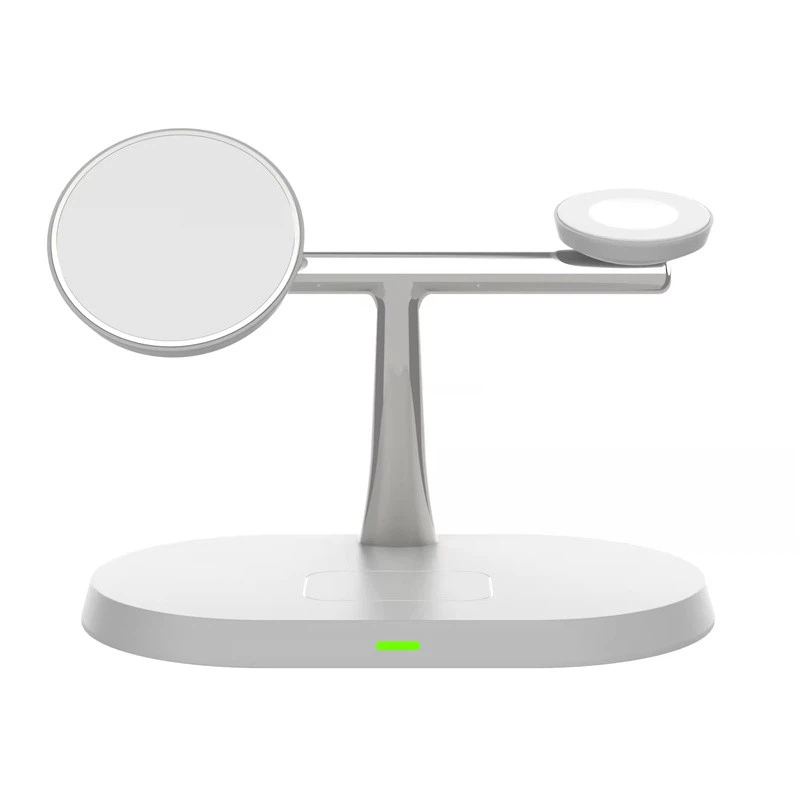
If you're interested in purchasing high - quality wireless chargers for your business or personal use, we'd love to have a conversation with you. Contact us to discuss your specific requirements and explore our range of products.
References
- Principles of Electromagnetic Induction, Physics Textbooks
- Lithium - Ion Battery Technology and Temperature Effects, Battery Research Journals