

Wireless car chargers have become an essential accessory for modern drivers, offering a convenient and hassle - free way to keep mobile devices charged while on the go. As a trusted car charger supplier, I'm excited to delve into the inner workings of these innovative devices and share how they function to provide seamless charging experiences.
The Basics of Wireless Charging Technology
Wireless charging, also known as inductive charging, is based on the principle of electromagnetic induction. This concept was first discovered by Michael Faraday in the 19th century. At its core, electromagnetic induction occurs when a changing magnetic field induces an electric current in a conductor.
In the context of wireless car chargers, there are two main components: the charging pad (the transmitter) and the device being charged (the receiver). The charging pad is installed in the car, usually in a convenient location such as the center console or dashboard. It contains a coil of wire that is connected to the car's power source. When an electric current passes through this coil, it creates an alternating magnetic field around it.
The receiver, which is built into the mobile device or attached as an external accessory, also has a coil. When the device is placed on the charging pad, the alternating magnetic field from the pad induces an electric current in the receiver's coil. This current is then converted into direct current (DC) by a rectifier circuit within the device, which can be used to charge the battery.
Components of a Wireless Car Charger
Transmitter Coil
The transmitter coil is a crucial part of the wireless car charger. It is typically made of copper wire wound in a specific pattern to generate a strong and uniform magnetic field. The design of the coil affects the efficiency of the charging process. A well - designed coil can transfer power more effectively, reducing energy losses and heat generation.
Power Management Circuit
The power management circuit in the wireless car charger is responsible for controlling the flow of electricity from the car's power source to the transmitter coil. It ensures that the correct amount of power is supplied to the coil to generate the appropriate magnetic field. This circuit also includes safety features such as over - current protection, over - voltage protection, and temperature monitoring. These features prevent damage to the charger and the device being charged.
Receiver Circuit
On the device side, the receiver circuit is responsible for converting the induced alternating current from the magnetic field into direct current for battery charging. It also includes a communication module that allows the device to communicate with the charger. This communication is important for negotiating the optimal charging power and ensuring compatibility between the charger and the device.
How Wireless Car Chargers are Integrated into Cars
Wireless car chargers need to be integrated into the car's electrical system. Most modern cars have a 12 - volt electrical system, which is used to power various accessories. The wireless car charger is connected to the car's power outlet, usually the cigarette lighter socket or a dedicated USB port.
When the car is started, power is supplied to the charger. The charger then converts the 12 - volt DC power from the car into the appropriate voltage and current for the wireless charging process. Some high - end wireless car chargers are designed to be hard - wired into the car's electrical system, providing a more permanent and reliable power connection.
Advantages of Wireless Car Chargers
Convenience
One of the main advantages of wireless car chargers is convenience. There's no need to fumble with cables to plug in your device. You simply place your phone on the charging pad, and it starts charging automatically. This is especially useful when driving, as it allows you to keep your hands on the wheel and your eyes on the road.
Reduced Wear and Tear
Traditional wired chargers can cause wear and tear on the charging port of your device over time. The constant plugging and unplugging of cables can loosen the port or damage the pins. Wireless charging eliminates this problem, as there is no physical connection between the charger and the device.
Compatibility
Many modern smartphones and other mobile devices are now equipped with wireless charging capabilities. Wireless car chargers are designed to be compatible with a wide range of devices, making them a versatile option for different users.

Limitations of Wireless Car Chargers
Efficiency
Wireless charging is generally less efficient than wired charging. Some energy is lost during the conversion from electrical energy to magnetic energy and back to electrical energy. This can result in slower charging times and increased heat generation.
Distance and Alignment
For wireless charging to work effectively, the device needs to be placed correctly on the charging pad. There is a limited distance and alignment range within which the magnetic field can induce a sufficient current in the receiver coil. If the device is not placed properly, the charging may be slow or may not work at all.
Our Product Range
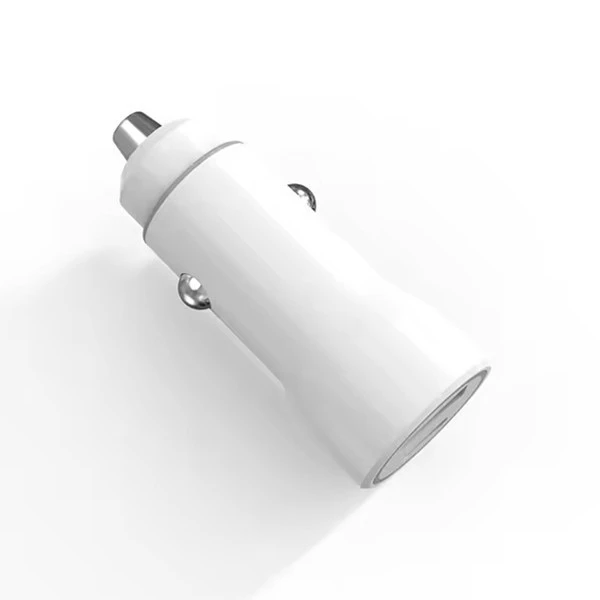
As a car charger supplier, we offer a wide range of high - quality wireless car chargers. In addition to wireless chargers, we also have other types of car chargers to meet different customer needs. For example, our QC3.0 supported USB C car charger provides fast charging for devices that support Qualcomm Quick Charge 3.0 technology. The Dual Socket Car Cigarette Charger allows you to charge two devices simultaneously using the car's cigarette lighter socket. And our Dual Port 12W Car Charger is a reliable option for charging multiple devices with a total power output of 12 watts.
Contact Us for Purchasing
If you are interested in our car chargers, whether it's wireless chargers or other types, we invite you to contact us for purchasing. Our team of experts can provide you with detailed product information, answer your questions, and help you choose the right charger for your needs. We offer competitive prices, high - quality products, and excellent customer service. Let's start a conversation about your car charging requirements today.
References
- "Electromagnetic Induction." Physics Classroom.
- "Wireless Charging Technology: Principles and Applications." IEEE Transactions on Power Electronics.
- Product manuals of our wireless car chargers.