

Hey there! As a supplier of 65W GaN wall chargers, I'm super excited to share with you how these amazing chargers adjust their output power.
First off, let's talk a bit about what GaN is. GaN stands for Gallium Nitride, which is a semiconductor material. Compared to traditional silicon-based chargers, GaN chargers are more efficient, generate less heat, and can be made smaller. That's why 65W GaN wall chargers are becoming so popular – they pack a powerful punch in a compact size.
So, how does a 65W GaN wall charger adjust its output power? Well, it all comes down to some smart technology and components inside the charger.
The Role of the Power Management IC
One of the key parts of a 65W GaN wall charger is the Power Management Integrated Circuit (PMIC). This little chip is like the brain of the charger. It constantly monitors the connected device and adjusts the output power accordingly.
When you plug in your device, the PMIC quickly checks what kind of device it is and what power it needs. For example, if you plug in an old smartphone that only supports 5V 2A USB Power Adapter, the PMIC will set the output voltage to 5V and the current to 2A. This is because sending too much power to the device could damage it, and sending too little would result in a slow charge.
On the other hand, if you plug in a modern laptop that supports high - power charging, like 65W PD (Power Delivery) charging, the PMIC can ramp up the output power to meet the laptop's requirements. It can adjust the voltage and current in real - time to provide the optimal power for the device.
Adaptive Voltage and Current Regulation
The charger uses a technique called adaptive voltage and current regulation. This means that it can change both the voltage and the current it supplies based on the device's needs.
Let's say you have a tablet that can handle different charging voltages. When the tablet's battery is almost empty, the charger might start by providing a higher current at a relatively lower voltage to quickly top up the battery. As the battery gets closer to full, the charger will gradually reduce the current and increase the voltage to ensure a safe and efficient charge.
This adaptive regulation is crucial for protecting the device's battery. Overcharging a battery can lead to reduced battery life and even pose a safety risk. By adjusting the power output, the charger ensures that the battery is charged in the most optimal way.
Communication Protocols
Another important aspect of power adjustment is the communication protocols between the charger and the device. Many modern devices use protocols like USB - PD (Power Delivery) and Qualcomm Quick Charge.
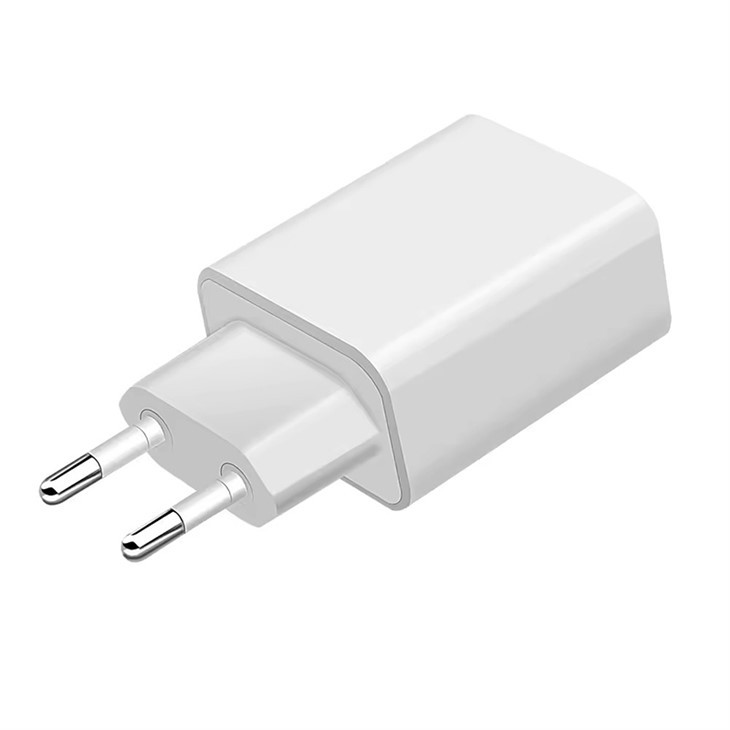
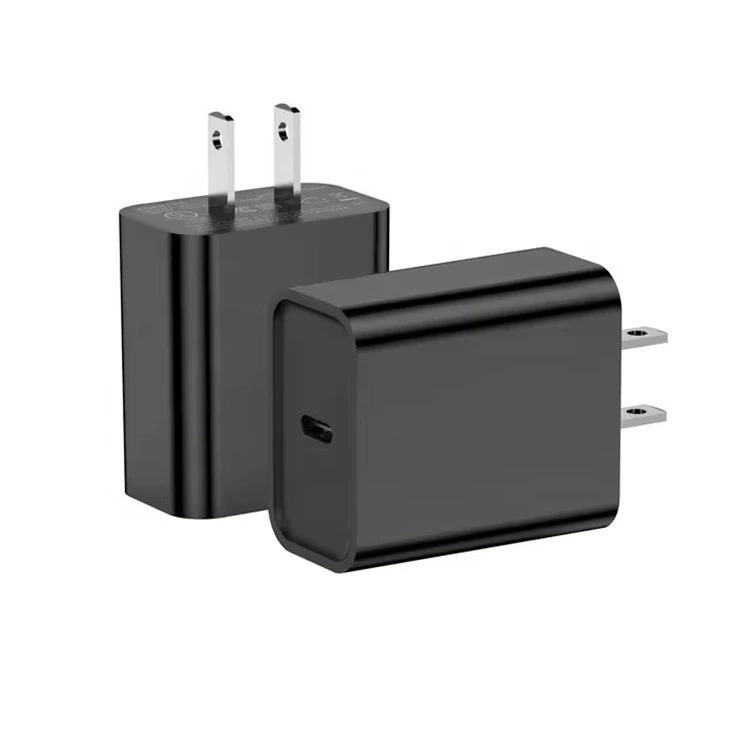
USB - PD is a widely adopted standard that allows for high - power charging and communication between the charger and the device. When a device that supports USB - PD is connected to a 65W GaN wall charger, they exchange messages to negotiate the optimal power level. The device tells the charger how much power it can accept, and the charger adjusts its output accordingly.
For example, a laptop might send a message to the charger saying that it can accept up to 65W of power. The charger then configures itself to provide the required power. Similarly, PD Fast Charging Power Adapter for US also follows these communication protocols to ensure seamless and efficient charging.
Thermal Management and Power Adjustment
Thermal management also plays a role in power adjustment. GaN chargers are known for being more efficient and generating less heat than traditional chargers, but they still need to manage heat properly.
If the charger starts to get too hot, the PMIC will reduce the output power to prevent overheating. This is a safety mechanism to protect the charger and the connected device. Once the charger cools down, it can resume providing the normal power output.
For instance, if you are using the charger in a hot environment or charging multiple devices simultaneously, the charger might throttle the power to keep its temperature in check.
Multiple Ports and Power Sharing
Many 65W GaN wall chargers come with multiple ports, such as USB - C and USB - A ports. When multiple devices are connected to these ports, the charger needs to distribute the power among them.
The charger's PMIC will analyze the power requirements of each device and allocate the power accordingly. For example, if you have a laptop connected to the USB - C port and a smartphone connected to the USB - A port, the charger might give most of the power to the laptop while still providing enough power to charge the smartphone at a reasonable speed.
Let's say you have a 5V/2A Dual USB - A USA Charger that is part of a multi - port 65W GaN charger. The charger will make sure that the total power output does not exceed its maximum capacity of 65W.
Benefits of Adjustable Power Output
The ability to adjust the output power offers several benefits. Firstly, it provides a high level of compatibility. You can use a single 65W GaN wall charger to charge a wide range of devices, from smartphones and tablets to laptops.
Secondly, it improves charging efficiency. By providing the exact amount of power that the device needs, the charger reduces energy waste. This not only saves electricity but also reduces the environmental impact.
Finally, it enhances the safety of the charging process. The charger can prevent overcharging, overheating, and over - current situations, which helps to protect both the device and the user.
Why Choose Our 65W GaN Wall Chargers
As a supplier of 65W GaN wall chargers, we take pride in offering high - quality products. Our chargers are designed with the latest technology to ensure efficient and safe power adjustment.
We use top - of - the - line PMICs that can accurately detect the device's power requirements and adjust the output power in real - time. Our chargers also support a wide range of communication protocols, so they can work with almost any device that supports fast charging.
In addition, we pay great attention to thermal management. Our chargers are equipped with advanced heat - dissipation mechanisms to prevent overheating and ensure stable performance.
If you're in the market for a reliable 65W GaN wall charger, whether you're a retailer looking to stock our products or an end - user looking for a great charging solution, we'd love to talk to you. Contact us for more information about our products and to discuss potential purchasing options. We're here to provide you with the best charging experience and support.
References
- "USB Power Delivery Specification" - USB Implementers Forum
- "GaN Technology in Power Electronics" - IEEE Transactions on Power Electronics
So, that's a rundown of how a 65W GaN wall charger adjusts its output power. I hope this article has been helpful in understanding the technology behind these amazing chargers. If you have any questions, feel free to reach out!