

In the ever - evolving landscape of technology, the question of whether a USB A wall charger can charge a device wirelessly is one that often piques the curiosity of consumers and tech enthusiasts alike. As a leading supplier of USB C and USB A wall chargers, we're here to delve into this topic and provide you with a comprehensive understanding.

Understanding USB A Wall Chargers
USB A wall chargers have been a staple in the charging world for many years. They are the traditional chargers that come with a rectangular USB A port, which is commonly used to connect devices such as smartphones, tablets, and other small electronics through a USB cable. These chargers work by converting the alternating current (AC) from the wall outlet into direct current (DC) that the device can use. The power output of USB A chargers can vary, but they typically range from 5W to 12W, which is suitable for charging many standard devices at a relatively slow to moderate pace.
The Basics of Wireless Charging
Wireless charging, on the other hand, operates on a different principle. It uses electromagnetic induction to transfer energy between the charger and the device. A wireless charger consists of a charging pad or stand that contains a coil. When an enabled device with a compatible coil is placed on the charging pad, an alternating magnetic field is created, which induces an electric current in the device's coil, thus charging the battery.
Can a USB A Wall Charger Charge a Device Wirelessly?
The short answer is no, a standard USB A wall charger cannot directly charge a device wirelessly. A USB A charger is designed to provide power through a physical connection via a USB cable. It lacks the necessary components, such as the induction coil and the associated circuitry, to generate the electromagnetic field required for wireless charging.
However, there is a workaround. You can use a wireless charging adapter in combination with a USB A wall charger. These adapters typically have a USB A connector on one end and a wireless charging pad on the other. You plug the USB A end of the adapter into the USB A wall charger, and then you can place your wireless - enabled device on the charging pad of the adapter. This way, the USB A wall charger powers the wireless charging adapter, which in turn charges the device wirelessly.
Advantages and Disadvantages of Using a USB A Wall Charger with a Wireless Charging Adapter
Advantages
- Cost - effective: If you already own a USB A wall charger, you can simply purchase a relatively inexpensive wireless charging adapter to add wireless charging functionality to your setup. This is a more budget - friendly option compared to buying a dedicated wireless charger.
- Versatility: You can use the USB A wall charger for both wired and wireless charging. When you need a quick charge, you can connect your device directly to the charger with a cable. When you prefer the convenience of wireless charging, you can use the adapter.
Disadvantages
- Limited Power Output: As mentioned earlier, USB A wall chargers usually have a lower power output compared to some dedicated wireless chargers. This means that the charging speed may be slower, especially for devices that support fast wireless charging. For example, some high - end smartphones can charge at up to 15W or more with a dedicated fast wireless charger, but a USB A charger with a wireless adapter may only be able to provide 5W or 7.5W of power.
- Extra Component: You need to carry an additional wireless charging adapter, which can be inconvenient if you're on the go. It also adds an extra step to the charging process.
Our Product Offerings
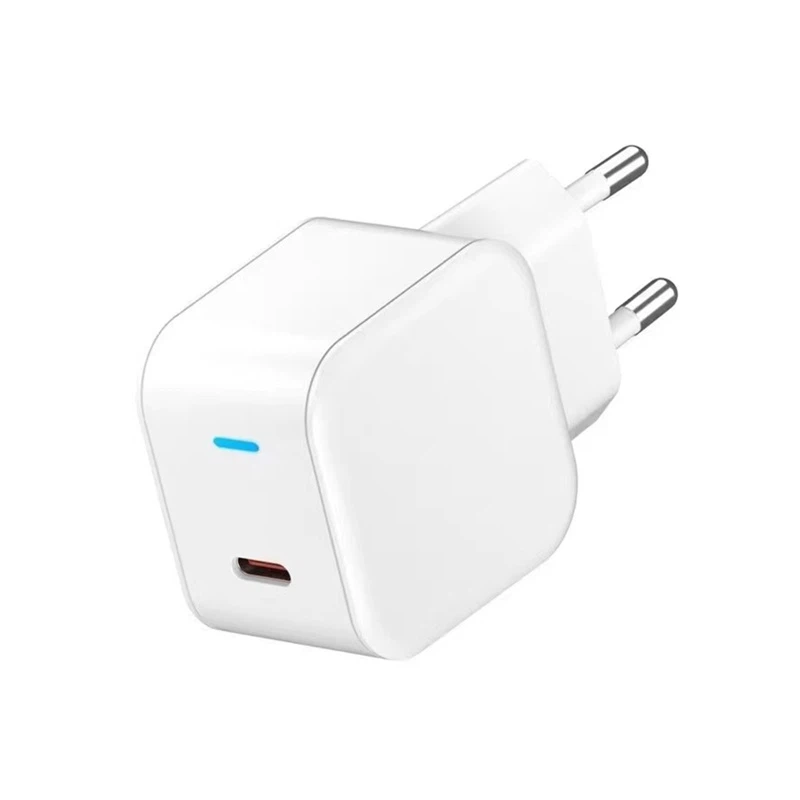
As a supplier of USB C and USB A wall chargers, we offer a wide range of high - quality products to meet your charging needs. Our 65W Single USB - C GaN Fast Wall Charger is a great option for those who need fast charging for their USB C - enabled devices. It uses Gallium Nitride (GaN) technology, which allows for a more compact design and higher power efficiency compared to traditional chargers.
If you're in the US and looking for a reliable power adapter, our PD Fast Charging Power Adapter for US is an excellent choice. It supports Power Delivery (PD) fast charging, which can significantly reduce the charging time for compatible devices.
For those who prefer the latest in charging technology, our GaN Charger USB C combines the benefits of GaN technology with the versatility of USB C. It can charge multiple devices simultaneously and is suitable for a wide range of electronics, from smartphones to laptops.
Conclusion
While a standard USB A wall charger cannot directly charge a device wirelessly, it can be used in conjunction with a wireless charging adapter to achieve wireless charging. This method has its pros and cons, but it can be a cost - effective and versatile solution for many users. At our company, we are committed to providing high - quality USB C and USB A wall chargers that meet the diverse needs of our customers.
If you're interested in purchasing our products or have any questions about our chargers, we encourage you to contact us for a procurement discussion. We look forward to serving you and helping you find the perfect charging solution for your devices.
References
- "Wireless Charging Technology Explained." Electronics Notes.
- "USB Power Delivery: A Comprehensive Guide." Anker Blog.