

In the modern era of technology, USB C wall chargers have become ubiquitous, powering a wide array of devices from smartphones and tablets to laptops and even some high - end wearables. As a USB C and USB A Wall Charger supplier, I've witnessed firsthand the growing demand for these chargers and the curiosity about how they communicate with devices. In this blog post, I'll delve into the fascinating world of charger - device communication, explaining the technical aspects in an accessible way.
The Basics of USB C Technology
USB C, or USB Type - C, is a relatively new connector standard that offers a reversible design, which means you don't have to worry about plugging it in the wrong way. It also supports a higher power delivery compared to its predecessors, USB A and USB B. The key to its advanced functionality lies in its ability to communicate with the connected device to determine the optimal power requirements.
The USB Implementers Forum (USB - IF) has defined a set of protocols for USB Power Delivery (PD). This protocol allows the charger and the device to negotiate the power level. When a device is connected to a USB C wall charger, the first step is the initial handshake. This is a short exchange of signals that identifies both the charger and the device and their capabilities.
The Handshake Process
The handshake begins as soon as the device is plugged into the charger. The charger sends out a small voltage on the CC (Configuration Channel) pins of the USB C connector. This voltage is used to detect the presence of a device and to start the communication process. The device then responds by sending back a signal indicating its power requirements.
For example, a smartphone might signal that it only needs 5 volts and 1 amp (5W) to charge, while a laptop could demand a much higher power level, such as 20 volts and 3 amps (60W). The charger then assesses whether it can provide the requested power. If it can, it sends a confirmation signal to the device, and the charging process begins at the negotiated power level.
Power Delivery Negotiation
The USB PD standard supports multiple power levels, and the negotiation process is quite dynamic. Chargers are often designed to be flexible, capable of delivering different power outputs depending on the connected device. This is where the intelligence of the charger comes into play.
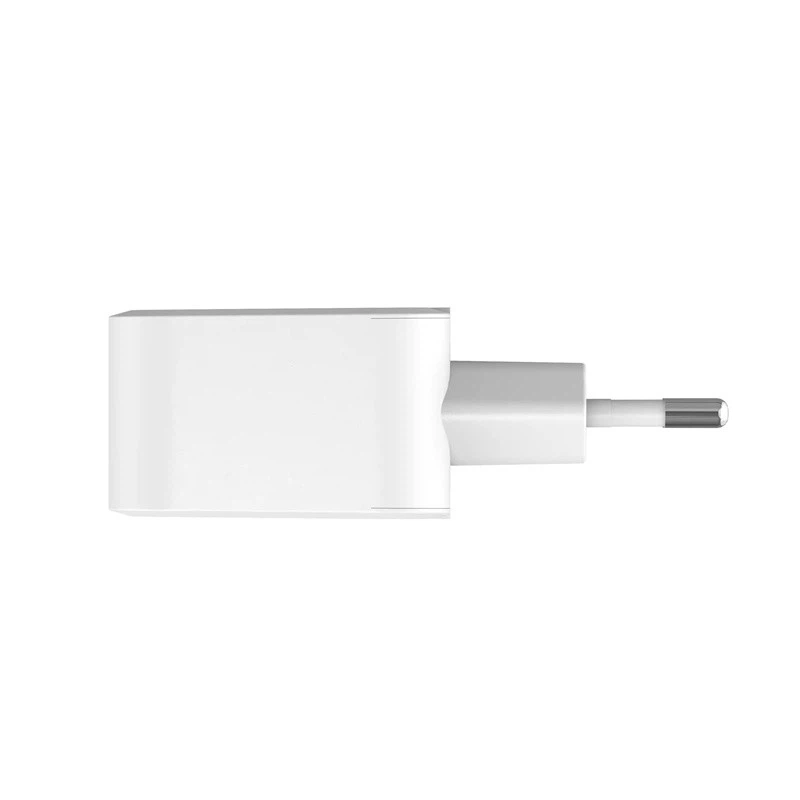
Let's say you have a GaN Charger USB C. Gallium Nitride (GaN) chargers are known for their high - efficiency and compact size. These chargers can quickly adjust their power output based on the device's needs. If you first connect a smartphone, it will provide a low - power output. But if you then swap it with a tablet or a laptop, the charger can renegotiate the power delivery to meet the new device's requirements.
Role of Firmware
Both the charger and the device rely on firmware to manage the communication process. The charger's firmware is responsible for detecting the device, negotiating the power level, and ensuring that the power delivery is safe and efficient. It continuously monitors the device's power consumption and adjusts the output as needed.
On the device side, the firmware also plays a crucial role. It communicates the device's power requirements accurately to the charger and manages the charging process internally. For example, it might limit the charging speed to prevent overheating or to protect the battery's lifespan.
Safety Features in Communication
Safety is a top priority in charger - device communication. USB C chargers are equipped with various safety features to protect both the charger and the device. Over - voltage protection (OVP) ensures that the charger does not deliver a voltage higher than what the device can handle. If the charger detects an abnormal voltage condition, it will immediately cut off the power supply.
Similarly, over - current protection (OCP) prevents excessive current from flowing to the device. This is important because too much current can damage the device's battery and other components. These safety features are integrated into the communication process, and the charger constantly monitors the voltage and current levels during the charging process.
Compatibility and Standards
One of the challenges in the USB C market is ensuring compatibility between different chargers and devices. The USB - IF has established strict standards to ensure that all USB C chargers and devices adhere to the same communication protocols. Chargers that are UL Certified Wall Charger have passed rigorous testing to meet these standards.
UL certification is a mark of quality and safety. It indicates that the charger has been tested for electrical safety, performance, and compliance with the USB PD standards. When you choose a UL - certified charger, you can be confident that it will communicate effectively with your device and provide a safe charging experience.
Travel Adaptors and Global Compatibility
For travelers, having a reliable charger is essential. Our ETL Certified Portable Travel Adaptor for USA is designed to provide a seamless charging experience in different countries. These travel adaptors are not only ETL - certified for safety but also support the USB C communication protocols.
They can detect the local power supply voltage and adjust the charger's output accordingly. This means that you can use your charger in the USA, Europe, Asia, or any other part of the world without worrying about voltage compatibility issues. The travel adaptor also ensures that the communication between the charger and the device remains stable, regardless of the power source.
The Future of USB C Charger Communication
As technology continues to evolve, we can expect further improvements in USB C charger communication. Future chargers may be able to communicate with devices in more sophisticated ways, perhaps even predicting the device's power needs based on usage patterns.
There is also a growing trend towards faster charging speeds. With the development of new battery technologies and more efficient power delivery systems, USB C chargers will likely be able to charge devices even more quickly while maintaining safety and compatibility.

Conclusion
In conclusion, the communication between a USB C wall charger and a device is a complex but well - defined process. It involves a series of handshakes, power negotiations, and safety checks to ensure that the device is charged efficiently and safely. As a USB C and USB A Wall Charger supplier, we are committed to providing high - quality chargers that adhere to the latest standards and offer reliable communication with a wide range of devices.
If you are interested in purchasing our chargers for your business or personal use, we invite you to contact us for procurement discussions. We can provide you with detailed information about our product range, pricing, and customization options. Our team of experts is ready to assist you in finding the perfect charger solutions for your needs.
References
- USB Implementers Forum. USB Power Delivery Specification.
- Underwriters Laboratories (UL). UL Standards for Electrical Equipment.
- Electrical Testing Laboratories (ETL). ETL Certification Guidelines.