

What is the conductor material of a Type C to Type C cable?
As a supplier of Type C to Type C cables, I often get asked about the conductor materials used in these cables. The choice of conductor material is crucial as it directly impacts the cable's performance, durability, and overall quality. In this blog post, I'll delve into the common conductor materials for Type C to Type C cables, their characteristics, and how they affect the cable's functionality.
Copper: The Most Common Conductor Material
Copper is by far the most widely used conductor material in Type C to Type C cables. It has several properties that make it an ideal choice for this application.
High Electrical Conductivity
Copper has excellent electrical conductivity, which means it can efficiently transmit electrical signals and power with minimal loss. This is essential for Type C to Type C cables, as they are designed to transfer data at high speeds and deliver power for charging various devices. For example, when you're using a Type C to Type C cable to transfer large files between a laptop and an external hard drive, the high conductivity of copper ensures that the data transfer is fast and reliable.
Ductility
Copper is a highly ductile material, which means it can be easily drawn into thin wires without breaking. This property allows cable manufacturers to produce cables with multiple thin copper conductors, which can be bundled together to increase the cable's flexibility and reduce its overall size. The flexibility of Type C to Type C cables is important as it allows them to be easily routed around objects and used in various settings.
Resistance to Corrosion
Copper has good resistance to corrosion, which helps to maintain the cable's performance over time. When a cable is exposed to moisture or other environmental factors, corrosion can occur, which can degrade the cable's conductivity and lead to signal loss. However, copper's natural resistance to corrosion helps to prevent this from happening, ensuring that the cable remains reliable and functional for a long time.
Most of our Type C to Type C cables, such as the 3A Fast Charge PVC USB C Cable, use high-quality copper conductors to ensure optimal performance and durability.
Aluminum: A Cost-Effective Alternative
While copper is the most common conductor material, aluminum is also used in some Type C to Type C cables, especially those designed for cost-sensitive applications.
Lower Cost
Aluminum is generally less expensive than copper, which makes it an attractive option for cable manufacturers looking to reduce costs. By using aluminum conductors, manufacturers can produce cables at a lower price point, making them more accessible to a wider range of consumers.
Lightweight
Aluminum is a lightweight material, which can be an advantage in some applications. For example, in portable devices where weight is a concern, using aluminum conductors can help to reduce the overall weight of the cable and the device.
However, aluminum also has some limitations compared to copper. It has lower electrical conductivity, which means that it may not be suitable for high-speed data transfer or high-power charging applications. Additionally, aluminum is more prone to corrosion than copper, which can affect the cable's performance over time.
Silver: For High-End Applications
Silver is another conductor material that is sometimes used in high-end Type C to Type C cables.
Exceptional Electrical Conductivity
Silver has the highest electrical conductivity of all metals, even higher than copper. This makes it an ideal choice for applications where the highest possible performance is required, such as in professional audio and video equipment or high-speed data transfer cables.
Low Resistance
Silver also has very low resistance, which means that it can transmit electrical signals and power with even less loss than copper. This can result in faster data transfer speeds and more efficient power delivery.
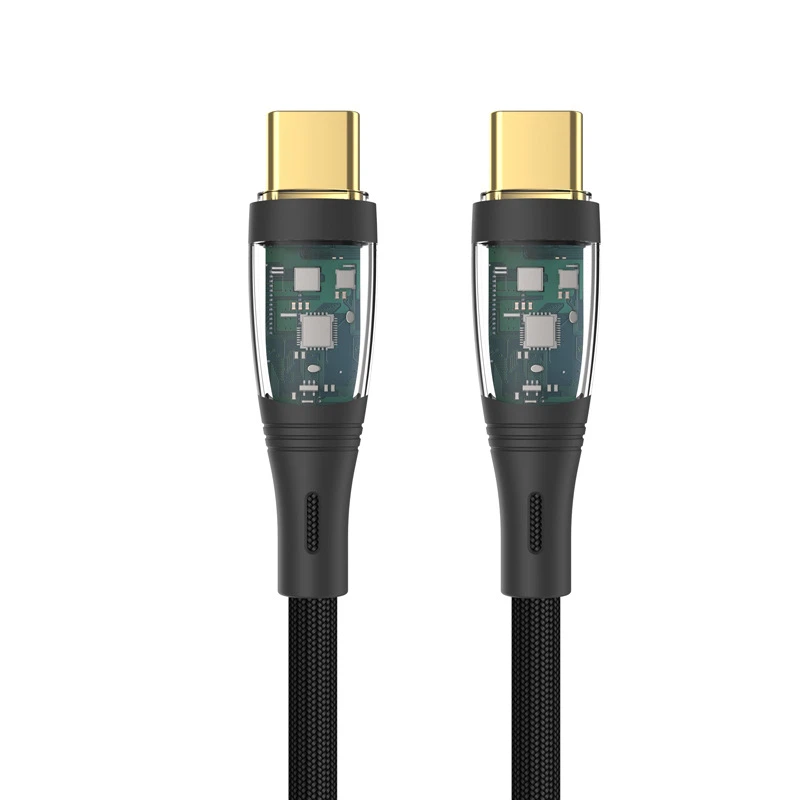
However, silver is also much more expensive than copper and aluminum, which makes it less practical for most consumer applications. Our 5A Transparent USB C Cable uses high-quality copper conductors, but for customers with specific high-performance requirements, we can also offer custom cables with silver conductors.
Impact of Conductor Material on Cable Performance
The choice of conductor material can have a significant impact on the performance of a Type C to Type C cable. Here are some key performance factors that are affected by the conductor material:
Data Transfer Speed
As mentioned earlier, the electrical conductivity of the conductor material plays a crucial role in determining the data transfer speed of the cable. Cables with high-conductivity materials such as copper or silver can transfer data at faster speeds than those with lower-conductivity materials like aluminum.
Power Delivery
The conductor material also affects the cable's ability to deliver power. High-conductivity materials can carry more current without overheating, which means they can support higher power charging. For example, a Type C to Type C cable with copper conductors may be able to deliver up to 100W of power, while a cable with aluminum conductors may only be able to deliver 65W or less.
Signal Integrity
The quality of the conductor material can also impact the signal integrity of the cable. A cable with a high-quality conductor material is less likely to experience signal loss or interference, which can result in a more stable and reliable connection.
Our Product Range
At our company, we offer a wide range of Type C to Type C cables to meet the diverse needs of our customers. Our cables are available in different lengths, colors, and configurations, and they are all designed to provide high performance and reliability.
In addition to our standard cables, we also offer custom cable solutions for customers with specific requirements. Whether you need a cable with a particular conductor material, length, or connector type, we can work with you to develop a solution that meets your needs.
For example, our Lanyard Cable is a unique and stylish option that is perfect for on-the-go use. It features a retractable design and a built-in lanyard, making it easy to carry and use wherever you are.
Contact Us for Procurement
If you're interested in purchasing Type C to Type C cables for your business or personal use, we'd love to hear from you. Our team of experts can help you choose the right cable for your needs and provide you with a competitive quote. Whether you need a small quantity of cables for a personal project or a large order for your business, we can accommodate your requirements.

Feel free to reach out to us to discuss your procurement needs and start a conversation about how we can work together to meet your cable requirements.
References
- Groover, M. P. (2010). Fundamentals of Modern Manufacturing: Materials, Processes, and Systems. Wiley.
- Tustin, A. (2001). Copper and Its Alloys. ASM International.